Stillness Is Everywhere
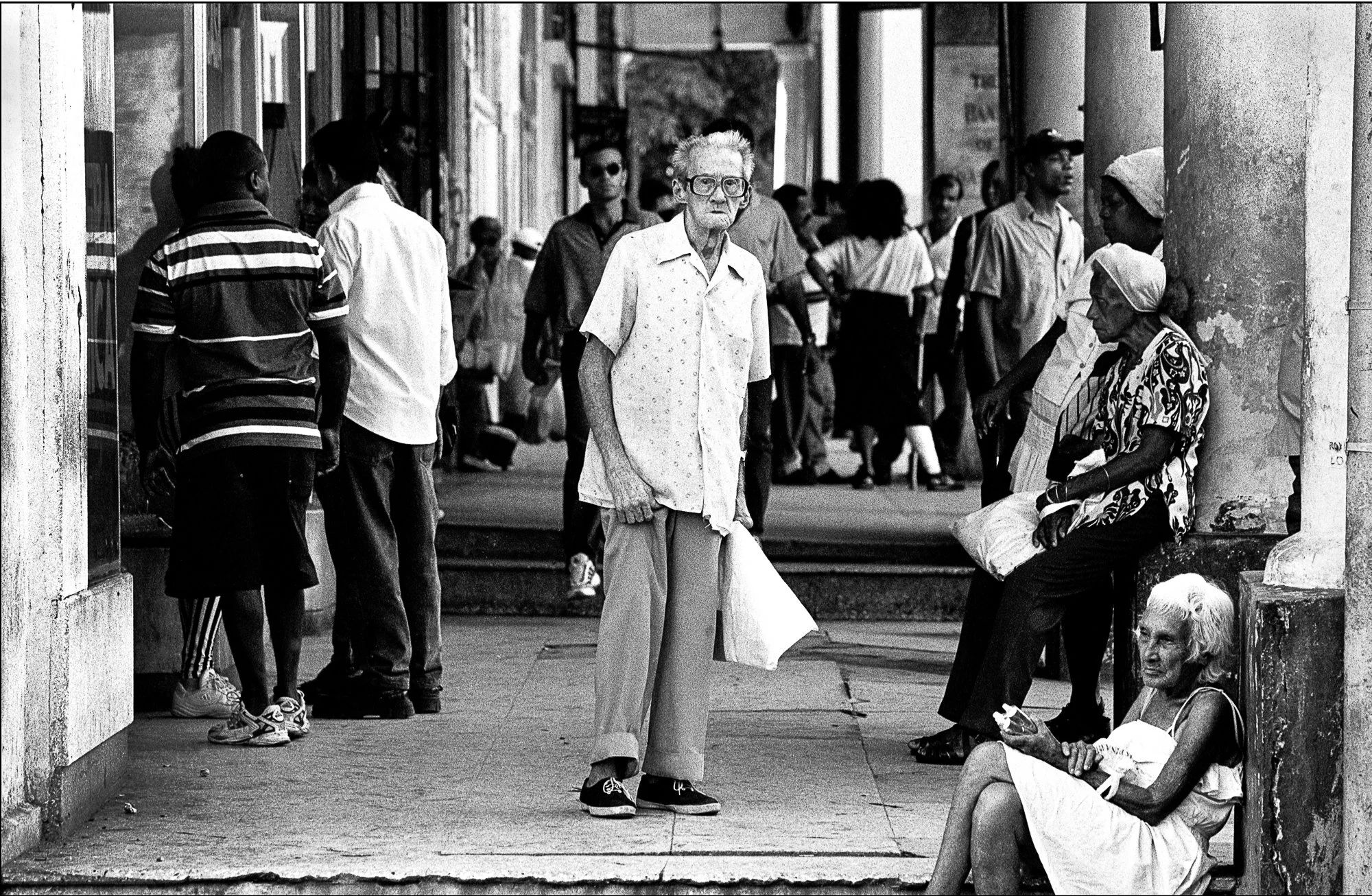
You notice him because he notices you.
Not in a confrontational way, nothing so dramatic but with a steadiness that feels almost deliberate, as if he understands that being seen is now part of the transaction of the day. He stands in the center, holding a small bag, the kind that suggests either a modest success or a long attempt at one. Around him, the street arranges itself into a kind of quiet choreography: people leaning, sitting, waiting, as if motion itself has become optional.
If you follow his gaze for a moment, you begin to feel that he is not asking anything from you, and that is precisely what unsettles. He is not performing hardship. He is not signaling distress. He is simply there, present in a way that feels almost formal.
To his right, a woman sits low to the ground, holding three small tubes, ointment, perhaps toothpaste, perhaps something meant to soothe a discomfort that doesn’t easily go away. She studies the street with a kind of practical focus, as if those looking for a solution lies not just in what they are, but in what they might still do. Time has widened enough here to accommodate such stillness.
And that stillness is everywhere. It gathers in the shoulders of those leaning against columns, in the absence of smiles, in the quiet agreement to wait without expectation. It’s not despair exactly, more a kind of suspension, as if life has been placed on hold but no one has been told when it will resume.
The man in the center seems to carry something different, though it’s difficult to name. Perhaps it’s the accumulation of years lived in motion, years when effort pointed to a greater good, when standing still was a choice rather than a condition. He would have been young when the future felt structured, when belief came with direction. That memory doesn’t disappear; it lingers, shaping even how he stands now.
If you stay with him a moment longer, you begin to sense that his gaze is not about you at all. It passes through you, or perhaps includes you, as part of a wider accounting, of what has changed, of what remains, of what cannot quite be reconciled.
And you, standing outside the frame but somehow drawn into it, begin to understand that empathy here is not about feeling for them in any obvious way. It is about allowing the stillness to reach you. About recognizing that this moment, quiet, uneventful, unresolved is carrying more than it shows.
The man keeps looking.
Not demanding, not accusing.
Just holding his place in the center of it all, as if that, for now, is what remains to be done.
