The Hammock
I first read about them in a Miami newspaper.
Families from Cuba's eastern provinces drifting toward Havana, building homes from whatever they could salvage, wood, corrugated metal, scraps of plastic. Habaneros called them palestinos, a name that managed to make fellow Cubans sound like foreigners in their own country.
The article contained no photographs.
So, on my next trip, I went looking.
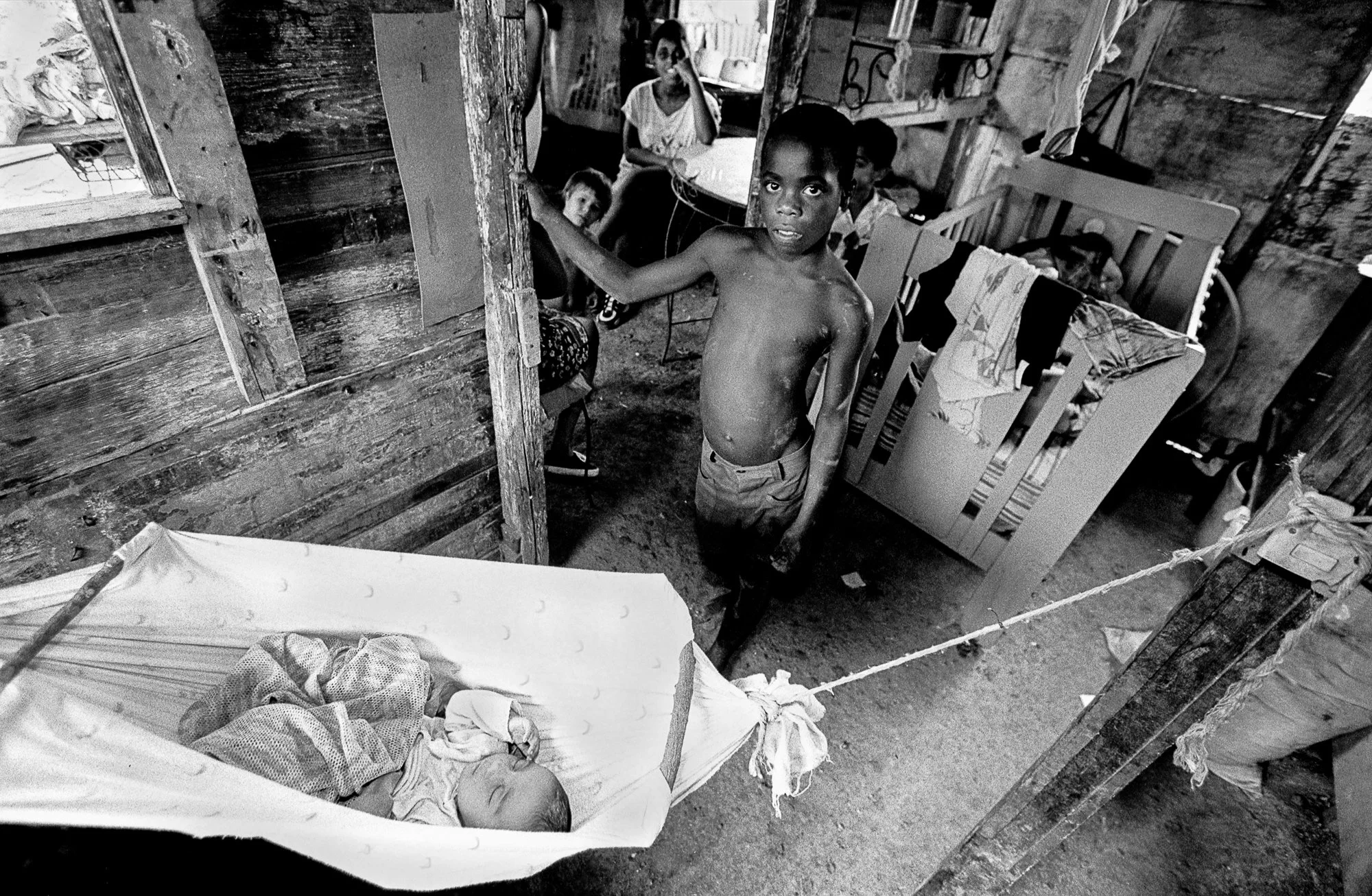
The settlement was less built than assembled. Every wall had belonged somewhere else. The floor was packed earth. Daylight slipped through cracks in the wood as easily as the breeze.
Inside one house, I stopped seeing the walls.
A baby slept soundly in a hammock made from a blanket, two rough sticks of wood, and a few lengths of rope. Behind it stood a crib, not holding a child but shirts, blankets, whatever the family needed to keep off the dirt floor. The hammock held the baby. It struck me that the poorest house I'd entered in Havana seemed to know exactly what mattered and exactly what didn't.
Necessity has very little interest in convention.
Standing beside the baby was a young boy, one hand leaning on a wooden post. He wasn't smiling for the camera or hiding from it. His eyes held mine with a mixture of curiosity and something else, something almost protective, as though he had quietly appointed himself the keeper of the smallest life in the room.
For a moment, I wasn’t sure who was studying whom.
When I first came to Cuba, I believed distance was a virtue. People became photographs. Photographs became stories. Stories became reasons to take another trip.
But that room refused to stay inside a negative.
What lingered wasn't the poverty. It was the quiet ingenuity of turning almost nothing into exactly what was needed. A hammock for a baby. A crib reborn as a closet. A boy standing watch without ever saying he was.
I left with another photograph. I left with rolls of exposed film. It would take years to realize that these rolls were not the only thing being developed.
Film never announces the moment it becomes a photograph. It waits in silence until the shadows begin to confess themselves. Perhaps people are no different. I came to Cuba believing I was here to tell stories, to collect images before boarding another flight. I didn't notice that, somewhere along the way, the country had slipped me into the same chemical bath as my film would soon experience. The negatives hanging to dry were mine. Cuba was simply revealing what had always been there, hidden beneath years of distance.
It had begun developing me.
